Weather's Subtle Hand in Shaping Accumulator Success Rates for Football and Horse Racing Enthusiasts

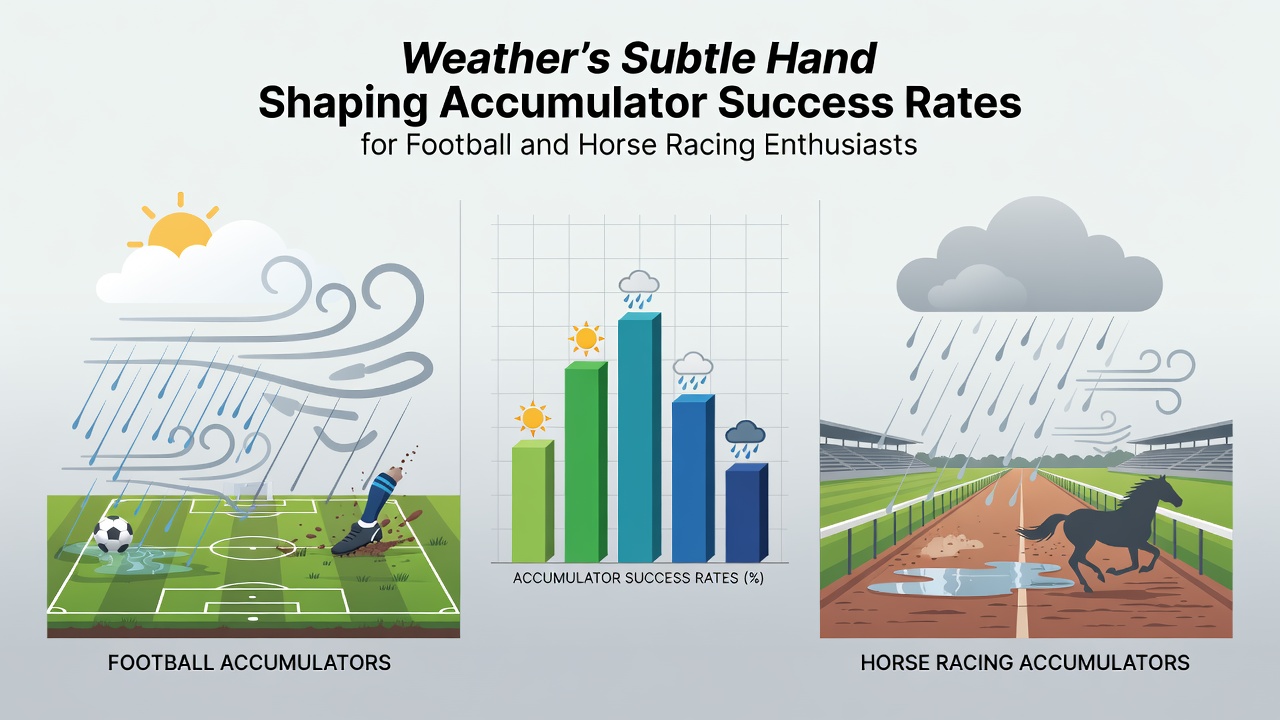
Weather patterns exert measurable effects on football matches and horse races, which in turn influence the outcomes that determine accumulator success rates across betting markets. Data from meteorological agencies shows that precipitation levels, wind speeds, and temperature variations alter pitch conditions, track surfaces, and player or equine performance metrics in consistent ways that statisticians track over multiple seasons. Observers note that accumulators, which combine several selections into one wager, become more sensitive to these environmental factors because a single weather-related deviation can shift the entire bet outcome.
Football Accumulators and Atmospheric Variables
Football matches scheduled during periods of heavy rainfall often record lower goal tallies according to league-wide statistics compiled by performance analysts. Wet conditions increase ball slippage and reduce passing accuracy, while defenders gain advantages in positioning because forwards struggle with first-touch control on saturated surfaces. Researchers at institutions studying sports science have documented that wind gusts above 20 kilometers per hour correlate with fewer long-range shots finding the target, because trajectory calculations used by goalkeepers and strikers require adjustment under crosswinds. These patterns appear in datasets covering European and North American leagues where accumulators frequently include over/under goal lines or both-teams-to-score selections.
Accumulators built around specific player props face additional layers of complexity when temperature drops occur. Cold weather affects muscle elasticity and increases injury risk for athletes unaccustomed to lower readings, which data from match reports indicates can reduce sprint distances covered by wide players. Bettors constructing accumulators therefore monitor forecasts released by agencies such as the National Oceanic and Atmospheric Administration to adjust selections involving high-scoring teams or individual goal contributions.
Horse Racing Track Surfaces and Precipitation Effects
Horse racing accumulators depend heavily on official going reports that reflect moisture content in turf or dirt surfaces. Heavy rain softens ground and favors horses with proven stamina over those optimized for firm conditions, a distinction recorded in official form guides maintained by racing authorities. Studies conducted by performance researchers demonstrate that winning times lengthen by measurable margins on rain-affected tracks, with the degree of slowdown varying according to drainage quality at each venue. Accumulators that combine multiple race winners therefore incorporate these surface changes into probability models before finalizing selections.
Wind direction and strength also modify race dynamics at exposed tracks because gusts can influence stride patterns during the home straight. Data collected across Australian and North American circuits shows that tailwinds reduce recorded times while headwinds extend them, creating systematic biases that affect exotic bet types such as forecasts and tricasts bundled into larger accumulators. Trainers and jockeys adapt tactics based on these variables, yet the aggregate effect on multiple-race wagers remains statistically significant across large sample sizes.
Integrated Forecasting Tools and Accumulator Construction
Modern accumulator builders combine real-time weather feeds with historical performance databases to refine probability estimates. European Centre for Medium-Range Weather Forecasts models provide granular predictions that extend several days ahead, allowing time for selections to be adjusted before markets close. Analysts cross-reference these forecasts against past results where similar conditions prevailed, revealing repeatable edges in both football goal markets and horse racing place markets that form the backbone of many accumulator structures.
By June 2026, upgraded sensor networks at major venues had improved the resolution of localized weather data, enabling more precise adjustments to accumulator portfolios that span multiple events on the same day. This integration reduces variance caused by sudden showers or wind shifts that previously disrupted planned outcomes without warning.
Regional Variations in Weather Impact
Northern European football leagues experience prolonged periods of rain during winter months, which produces different statistical signatures compared with southern leagues where dry spells dominate. Accumulators that mix selections from both regions must account for these baseline differences because a rain-affected match in one geography carries distinct implications from a dry match elsewhere. Horse racing circuits in varied climates similarly generate divergent form patterns, with turf tracks in temperate zones responding differently to moisture than synthetic surfaces used in hotter regions.
Those constructing accumulators across borders therefore consult multiple meteorological sources to calibrate expectations accurately. Evidence gathered from longitudinal studies indicates that ignoring these regional weather signatures correlates with reduced long-term success rates in accumulator formats.
Conclusion
Weather remains an embedded variable within the statistical frameworks that govern accumulator outcomes in football and horse racing. Continued refinement of forecasting accuracy alongside performance databases allows systematic incorporation of atmospheric data into selection processes. The measurable influence of rain, wind, and temperature on match and race results continues to shape how accumulators are evaluated and priced across betting platforms.