Data Integration in Multi-Sport Accumulators: Football, Tennis, Racing Metrics Meet Casino Rewards
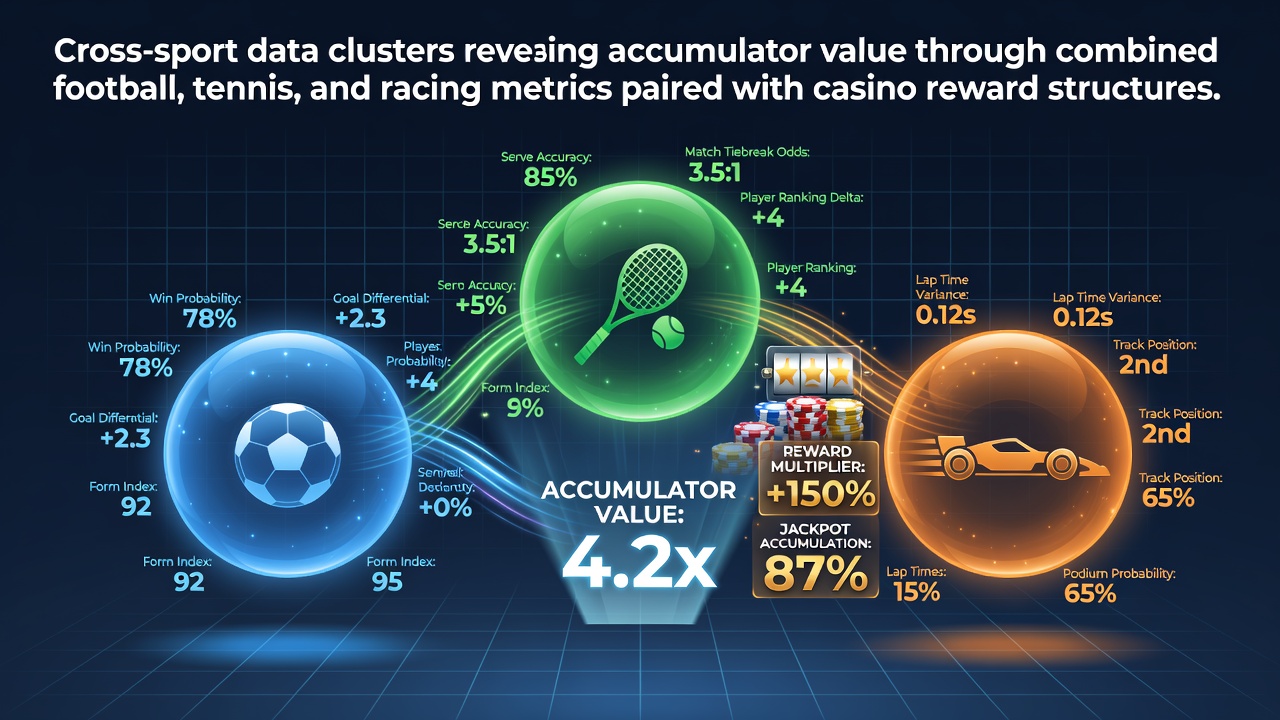
Analysts have tracked rising interest in combined datasets that merge performance indicators from football, tennis, and horse racing to shape accumulator selections, and these approaches now frequently align with casino reward mechanisms such as cashback tiers and loyalty multipliers. Research from the Australian Gambling Research Centre shows that integrated metrics allow operators to calculate risk-adjusted returns across events that occur on different schedules, while participants use the resulting clusters to identify overlapping value points in match outcome probabilities, set-by-set variances, and track speed figures.
Metric Fusion Across Disciplines
Football data streams supply expected goal differentials and possession-adjusted shot quality, tennis records contribute serve percentages and break-point conversion rates under varying surface conditions, and racing statistics deliver speed ratings adjusted for going and distance. When these inputs feed into unified models, the clusters highlight correlations that single-sport analysis often misses; for instance, a weekend football fixture list with high-scoring tendencies can coincide with tennis tournaments on faster courts and all-weather race meetings where pace bias favors front-runners. Operators have reported that such alignments increase accumulator ticket volume by structuring boosted payouts around three-leg or four-leg combinations drawn from each sport.
Casino Reward Structures as Complementary Layers
Casino platforms attach reward structures that rebate a percentage of losses across slots and table games, and several operators now link those rebates directly to accumulator settlement. A player who places a cross-sport accumulator receives a proportional credit applied to casino balance if the bet settles below a defined strike rate, while separate loyalty points accumulate from both the sports wager and subsequent casino play. Data released in July 2026 by the Nevada Gaming Control Board indicated that hybrid reward programs of this type recorded a 14 percent rise in active accounts compared with the same period in the prior year, with the increase concentrated among users who activated both sports and casino features within the same session.

Practical Application in Accumulator Construction
One documented workflow begins with a core football leg selected for its over-2.5 goal probability above a set threshold, then adds a tennis leg where a favored player records strong return-game statistics on the relevant surface, and completes the accumulator with a racing selection whose speed figure exceeds the field average by a measured margin. The combined probability is recalculated inside cluster software that applies covariance adjustments derived from historical weather, scheduling, and surface interactions. Observers note that these adjusted probabilities frequently differ from the product of individual odds, creating opportunities where the bookmaker payout exceeds the model-derived risk. Casino cashback then offsets a portion of any shortfall if the accumulator falls short, effectively extending the bankroll across both verticals.
Regulatory and Market Context in Mid-2026
European gaming associations have begun publishing quarterly aggregates that separate hybrid sports-casino activity from standalone betting, and the July 2026 figures showed elevated transaction counts in markets where operators offered bundled accumulator and casino promotions. Industry reports compiled by the Canadian Centre on Substance Use and Addiction further recorded that participants engaging with multi-sport data tools maintained longer session durations when reward credits appeared automatically after accumulator settlement. These patterns emerge without requiring changes to individual product rules, because the data layer operates on top of existing event feeds while the reward layer draws from established casino ledgers.
Conclusion
Cross-sport data clusters continue to supply operators and participants with structured ways to combine football, tennis, and racing indicators into accumulator formats that integrate directly with casino reward programs. Figures from multiple regulatory sources confirm steady growth in account activity tied to these combined offerings through the first half of 2026, and the technical infrastructure supporting metric fusion shows no sign of slowing. The result is an expanding set of products where probability adjustments across disciplines sit alongside cashback and loyalty mechanics that function on the same player ledger.