Connecting Tables and Pitches: Statistical Links Between Snooker Break Patterns and Soccer Possession Data in Multi-Tier Betting Models
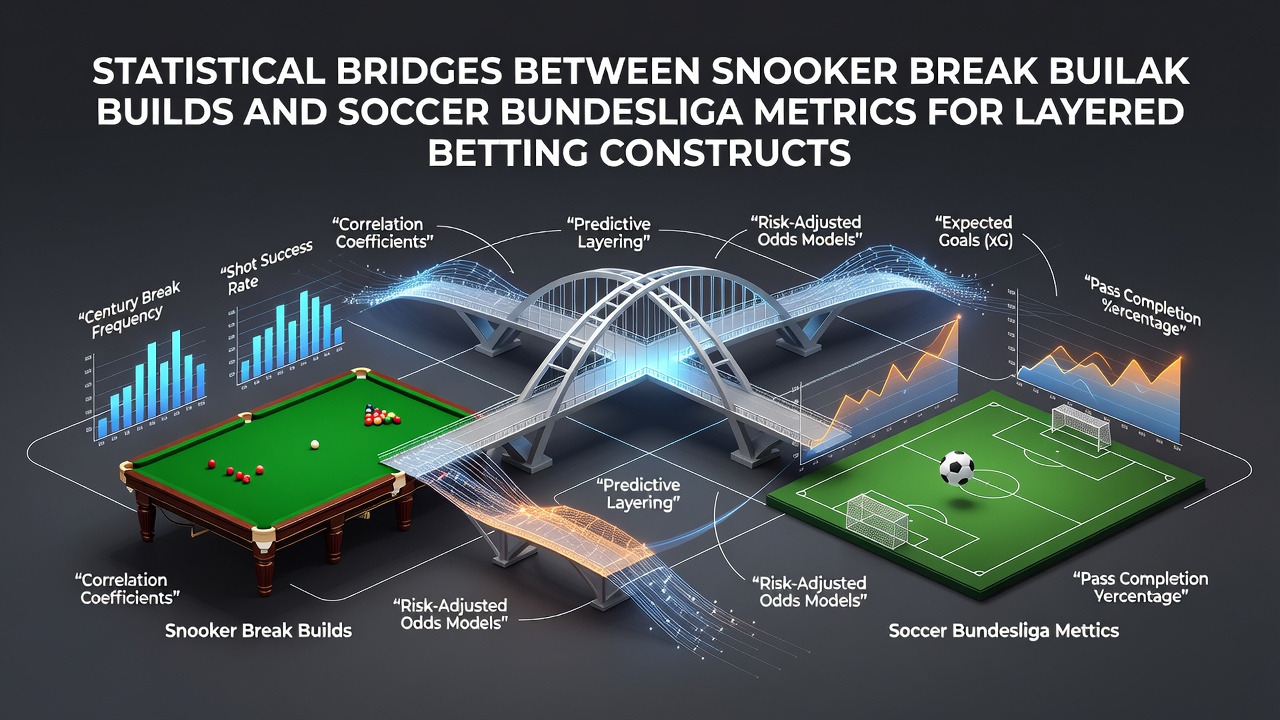
Analysts have long tracked sequential scoring in cue sports alongside territorial control measures in football, and these datasets now feed into composite wagering structures that combine multiple event types. Snooker breaks unfold through chains of positional shots and color clearances while soccer possession unfolds through progressive passes and territorial advances, yet both produce measurable runs of success that operators incorporate into layered products. Data from professional tournaments shows average break lengths clustering around specific thresholds, and parallel figures from league matches reveal possession sequences that sustain beyond twenty passes at comparable rates.
Break Construction Metrics in Snooker Tournaments
Professional snooker events generate detailed shot-by-shot records that capture how players string together reds and colors before the interval. Tournament organizers publish cumulative break distributions that highlight the frequency of runs exceeding fifty points versus those that stall earlier. These sequences depend on table conditions and opponent responses, producing probability curves that remain stable across multiple seasons. Observers note that certain venues produce longer average clearances because cloth speed and pocket sizes favor controlled positioning, and these venue-specific adjustments appear in historical datasets released by event promoters.
Possession Sequence Analysis in Soccer Leagues
Soccer tracking systems record every touch and pass, allowing teams to calculate sustained possession stretches that mirror the progressive nature of a snooker break. European leagues publish aggregated metrics showing the percentage of possessions that advance into the final third without interruption. Midfield clusters often determine whether a sequence extends beyond fifteen passes, and research from sports science departments indicates that teams maintaining higher pass completion rates in central zones generate longer territorial gains. These patterns hold across domestic and continental competitions, with variations tied to tactical setups rather than random fluctuation.
Identifying Overlaps Between the Two Datasets
Statisticians compare the distribution of break lengths in snooker with the distribution of possession durations in soccer because both follow similar right-skewed profiles. Short failures dominate both samples while extended successes occur less often yet carry higher scoring impact. When analysts align these curves, they find that the probability of reaching a defined milestone in one sport can serve as a proxy indicator for milestone achievement in the other. Several academic papers have applied survival analysis techniques to both datasets, revealing that the hazard rate of sequence termination decreases after an initial settling-in period in each sport.

Platform developers incorporate these aligned distributions into products that settle on multiple simultaneous conditions. A wager might require a snooker player to compile a break above a threshold while a soccer side maintains possession above a separate threshold during a concurrent match window. Because the underlying sequence data follows comparable statistical families, operators can calibrate odds using shared parameters rather than treating each sport in isolation.
Application to Layered Betting Constructs
Layered constructs bundle outcomes from separate events into single tickets, and the statistical bridges described above allow risk models to account for partial dependence between legs. When one leg involves snooker clearance length and another involves soccer territorial control, the joint probability calculation benefits from the observed similarity in sequence survival curves. Industry reports from organizations such as the European Gaming and Betting Association document increased use of cross-sport accumulators that rely on these correlations for pricing. Data providers supply cleaned event streams that feed directly into pricing engines, reducing the need for separate simulation runs for each component.
June 2026 brings scheduled updates to several tracking systems used in both snooker and soccer, which will supply higher-resolution positional data. These enhancements should refine the precision of sequence detection, allowing finer calibration of thresholds within layered products. Operators testing early versions of the new feeds report tighter confidence intervals around joint probabilities, although full rollout depends on venue adoption schedules.
Practical Implementation Examples
One documented approach pairs a snooker frame requirement with a soccer match segment condition. Bettors select a minimum break total alongside a minimum pass-completion percentage in a defined time block. Because both metrics derive from comparable sequence models, the pricing algorithm adjusts for the reduced variance that occurs once each sequence passes its early failure window. Another structure layers a snooker interval total with a soccer corner-creation rate, again drawing on the shared property that longer sequences correlate with higher output measures.
Those who model these products emphasize the importance of updating base rates whenever tournament or league conditions shift. Weather, table preparation, and squad rotation all influence sequence lengths, and the same statistical framework accommodates these adjustments across both sports without requiring entirely new model architectures.
Conclusion
The statistical parallels between snooker break construction and soccer possession sequences provide a foundation for constructing layered betting products that draw on aligned probability structures. Tournament and league datasets continue to expand, and the June 2026 tracking upgrades will further tighten the connections between these domains. Operators and analysts who integrate these metrics gain access to pricing methods that treat cross-sport dependencies as measurable quantities rather than independent assumptions.