16 May 2026
Bridging Digital Recreations and Classic Turf Metrics to Advance Racing Forecast Accuracy
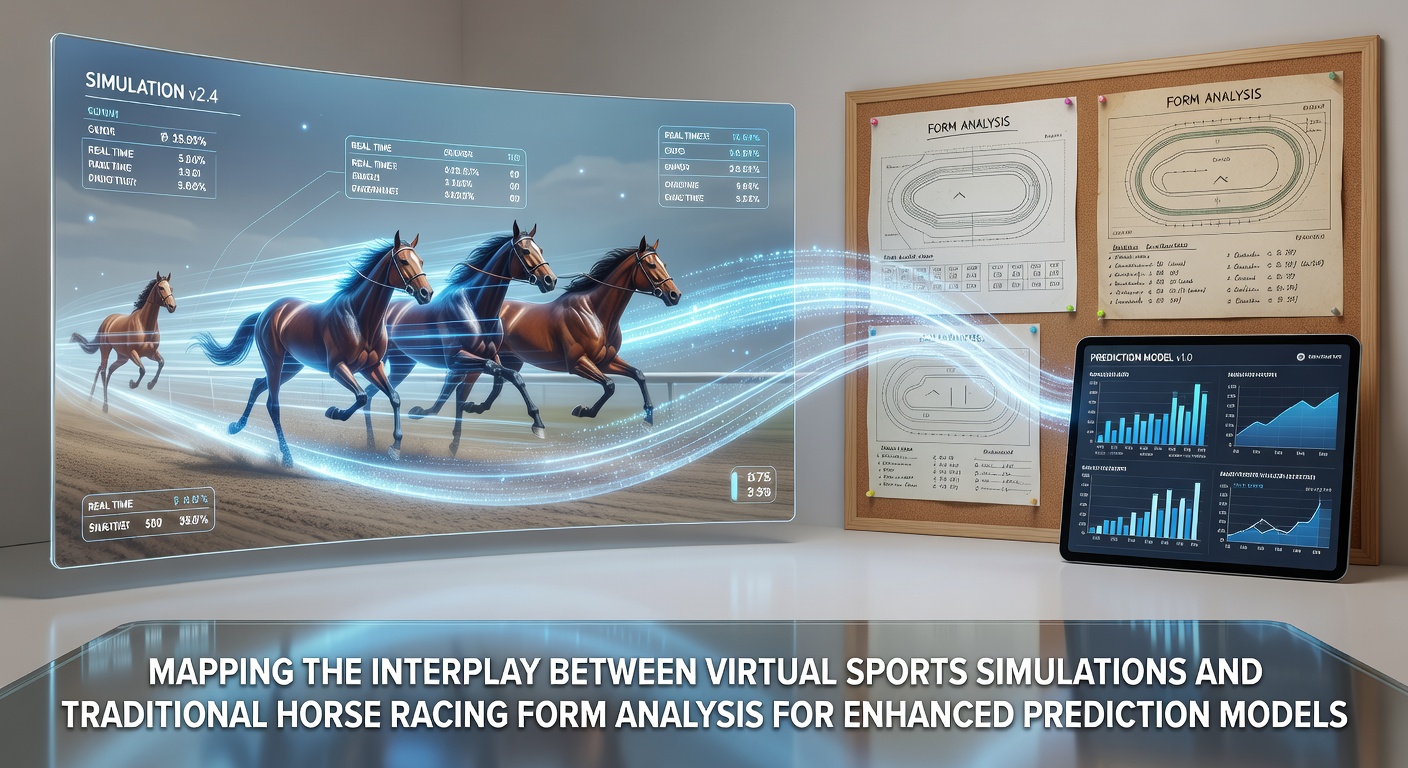
Virtual sports simulations replicate horse racing outcomes through algorithmic engines that process thousands of variables in real time, while traditional form analysis relies on historical data such as finishing positions, sectional times, and trainer patterns. Observers note that combining these approaches creates layered prediction frameworks where digital models test scenarios against verified past performances, and researchers have documented measurable improvements in accuracy when the two data streams merge.
Traditional Form Analysis in Modern Contexts
Form analysis begins with recorded race results, ground conditions, and jockey statistics that accumulate over seasons. Those who study equine performance compile speed figures adjusted for distance, weight carried, and track biases, then cross-reference them with recent workouts and pedigree influences. Data from major racing jurisdictions show that consistent application of these metrics has long supported handicappers in identifying contenders, yet the manual aggregation process leaves room for overlooked variables during high-volume race days.
In May 2026 industry updates from North American tracks indicated rising interest in digitizing legacy form databases to allow faster querying against live simulation outputs. Experts at the National Thoroughbred Racing Association have highlighted how standardized digital archives now feed directly into predictive algorithms, reducing the time required to build comprehensive runner profiles before each meeting.
Virtual Sports Simulations as Testing Grounds
Virtual horse racing platforms generate outcomes by applying physics-based models to randomized starting conditions while respecting breed-specific capabilities and surface interactions. These systems run millions of iterations daily, producing probability distributions that reflect fatigue curves, pace scenarios, and weather impacts. Analysts observe that such volume creates robust sample sets unavailable from real-world schedules limited to dozens of races per week.
Researchers at equine technology centers have found that simulation engines can isolate the effect of a single variable, such as a three-pound weight shift, across thousands of synthetic races. This controlled experimentation supplies granular insights that traditional records, constrained by actual race conditions, cannot isolate with equal precision.
Integration Techniques Driving Prediction Advances
Prediction models now ingest both streams through hybrid architectures that weight historical form against simulation-derived probabilities. Machine learning layers adjust coefficients when simulation results diverge from recorded outcomes, effectively recalibrating traditional speed ratings in light of emerging patterns. Practitioners report that these feedback loops tighten confidence intervals around forecasted finishing margins, particularly in races featuring atypical pace setups.

One documented case involved a mid-sized Australian racing stable that fed six months of official form data into a simulation platform calibrated to local track profiles. The resulting model flagged several long-priced runners whose sectional advantages only became visible when virtual pace pressures were applied to their past races. Subsequent real-world results aligned with the adjusted probabilities at a higher rate than either data source achieved independently.
Applications Across Racing Jurisdictions
European trainers have begun incorporating simulation outputs when planning target races for horses returning from layoffs, comparing digital recovery timelines against historical benchmarks. Meanwhile, North American syndicates use the same combined datasets to model post-position impacts across synthetic surfaces, where real data remains sparser than on dirt or turf. Australian handicappers, for their part, integrate virtual rain-effect simulations with official going reports to refine assessments before wet-weather meetings.
Academic papers emerging from veterinary and statistics departments illustrate how ensemble methods that blend both inputs reduce variance in long-range forecasts. These studies emphasize transparent weighting schemes so users understand when simulation data overrides or reinforces classical form signals.
Conclusion
The convergence of virtual sports simulations and traditional horse racing form analysis supplies prediction models with greater depth and adaptability. As digital archives expand and simulation fidelity improves, practitioners across regions continue to refine the balance between recorded history and generated scenarios, producing forecasts that reflect both empirical evidence and exhaustive hypothetical testing.