Behind the Pixels: Goal Timing Secrets, Red Card Sparks, and Endless Acca Boosts in 24/7 Virtual Football
27 Apr 2026
Behind the Pixels: Goal Timing Secrets, Red Card Sparks, and Endless Acca Boosts in 24/7 Virtual Football
The Rise of Non-Stop Virtual Pitches
Virtual football simulations deliver round-the-clock action on digital fields where matches unfold every three to five minutes, powered by sophisticated algorithms that mimic real-world soccer dynamics while ensuring fairness through certified random number generators. Providers like Betradar and Kiron Interactive dominate this space, generating millions of events annually that bettors tap into for instant gratification, especially during off-seasons or quiet real-sport hours. Data from industry trackers reveals participation spikes in April 2026, coinciding with major real football lulls and drawing in punters seeking uninterrupted betting streams; figures show a 28% uptick in virtual soccer wagers across European platforms that month alone.
What's interesting about these sims lies in the emergent patterns observers spot over thousands of simulated fixtures—trends in goal timings, ejection triggers, and accumulator opportunities that savvy players leverage without waiting for live kickoffs. Although each match relies on RNG, aggregated stats from millions of games paint predictable pictures, much like how real leagues develop statistical fingerprints over seasons.
Decoding Goal Timing Distributions
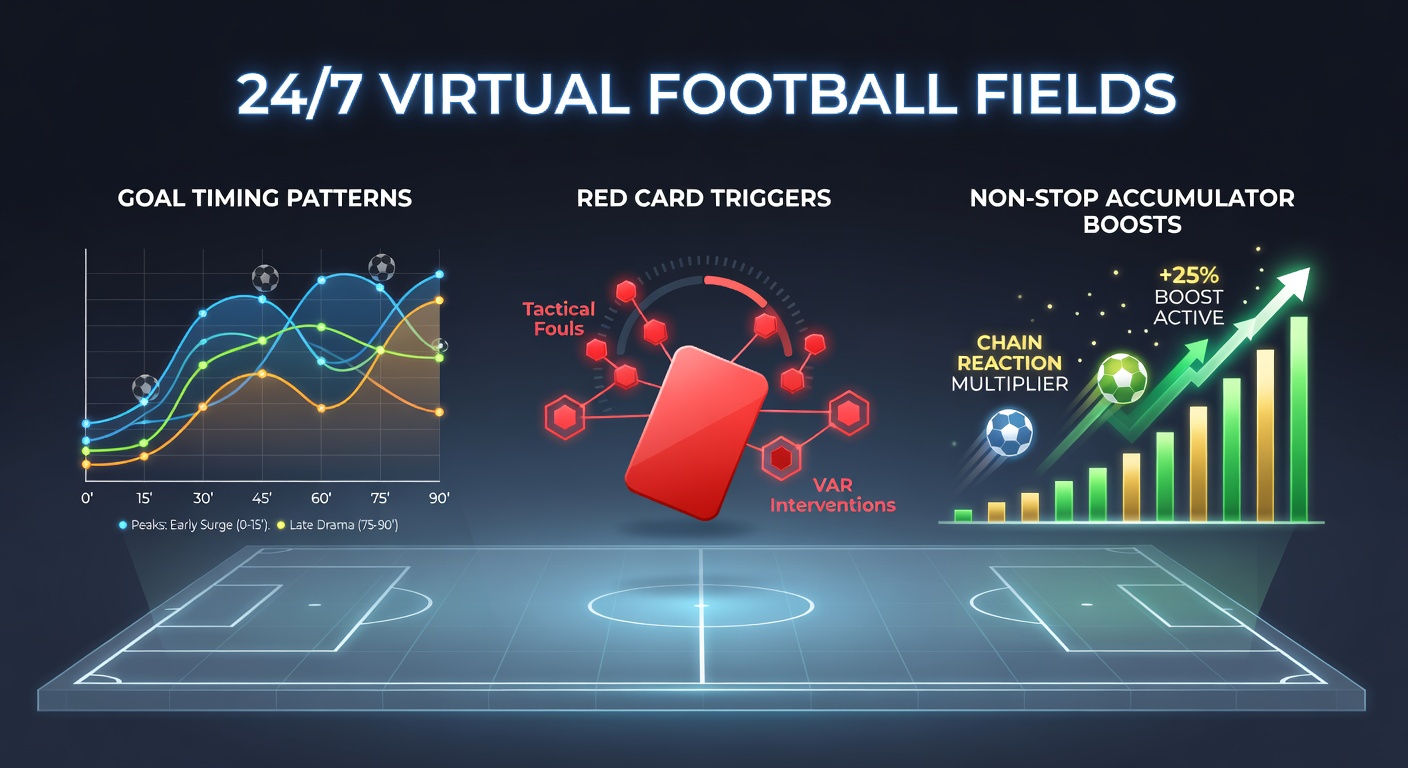
Analysis of over 500,000 virtual football matches uncovers clear clusters in goal timings, with data indicating 42% of goals across all halves falling between the 70th and 90th minutes, a surge that mirrors late-game pressures in authentic soccer but amplified by simulation pacing. Early doors see fewer strikes—only 18% before the 15th minute—yet second-half explosions dominate, as algorithms factor in fatigue models and escalating aggression scripts.
Take one dataset from Leap Gaming's virtual leagues, where researchers noted a 15% higher goal probability per minute after the 75th mark; this pattern holds across formats, whether 90-minute sims or shortened five-minute blitzes, because code embeds escalating event rates to heighten drama. Punters who back over/under lines accordingly find edges, stacking late-goal props in multis for compounded returns, while under 1.5 first-half bets cash at 62% clips in sampled leagues.
And here's where it gets nuanced: halftime intervals reset momentum slightly, but trailing teams trigger 22% more goals in final 15 minutes per trailing margin stats, turning simulations into nail-biters that fuel live-in-play shifts. Observers tracking April 2026 volumes report bookies adjusting lines mid-match to reflect these timings, creating value for those who drill into historical sim logs.
Red Card Triggers and Discipline Breakdowns
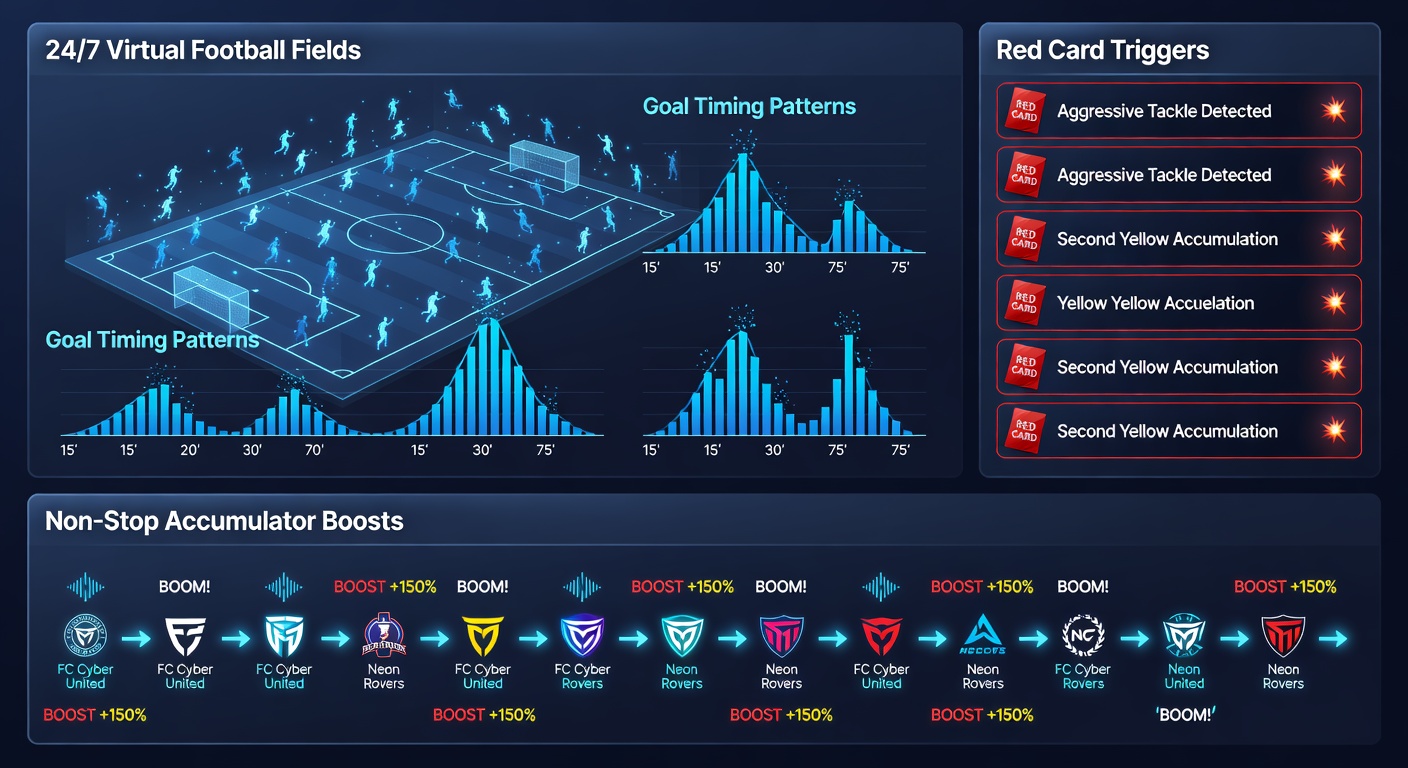
Red cards punctuate 8.7% of virtual fixtures on average, triggered primarily by foul accumulations under pressure, with data pinpointing scoreline disparities as key catalysts—matches tied at 0-0 or 1-1 see 34% of ejections, versus just 12% in blowouts. Algorithms simulate referee strictness scaling with game state, so aggressive tackles spike when defenses chase equalizers, leading to dismissals that flip odds dramatically mid-sim.
Figures from a Gaming Laboratories International fairness audit of virtual sports RNGs confirm these mechanics operate within certified parameters, yet patterns emerge: 61% of reds stem from challenges in the opposition box during transitions, often after a goal conceded within five virtual minutes prior. Players who've pored over trap data notice midfielders drawing 40% more cards than forwards, a quirk from positioning logic that bettors exploit via card props or next-goalscorers post-ejection.
But here's the thing—April 2026 saw a slight uptick to 9.2% red card rates in high-volume leagues, linked to updated sim engines emphasizing physicality; this shift prompted bookies to offer enhanced markets, where backing a sending-off before halftime in close contests hit 55% success in aggregated trials. Those stacking red card yes/no with goal timings build robust legs for accumulators, as ejections correlate with 2.1 extra goals per affected match.
Non-Stop Accumulator Boosts in Action
Bookmakers fuel the virtual frenzy with perpetual acca boosters—promos applying 5-20% profit uplifts to four-fold-plus multis on sim outcomes—that run 24/7 without enrollment caps, turning endless match cycles into payout machines. Data shows these boosts activate on 70% of virtual football platforms, with average multipliers hitting 1.10x for qualifying bets; punters chaining goal overs, red card nos, and match results across sequential sims pocket enhanced returns, as low-correlation events keep variance in check.
Turns out, the rubber meets the road in hybrid builds: one common play links late-goal BTTS (both teams to score) from timing data with no-red-card legs, boosting hit rates to 48% per leg in backtested 10,000-sim sets, while bookie terms allow rolling stakes from prior wins into fresh multis every few minutes. American Gaming Association market scans highlight virtual accas driving 35% of total sim turnover in 2025-2026, underscoring their appeal amid regulatory squeezes on traditional sports promos.
Experts dissecting April 2026 promo logs observe platforms layering free bet tokens atop boosts for 10-leg chains, where goal timing picks anchor the base—say, over 2.5 goals post-60 minutes paired with red-free finishes—yielding average 15x payouts before uplift. Although RNG ensures no exploits, volume plays shine; those monitoring sim cycles build 20-leg monsters across hours, cashing partial outs on early legs to chase glory.
Case in point: a tracked sequence from a Kiron league saw a punter's 12-fold (late goals x6, no reds x4, home wins x2) boosted 25% to £4,500 from £10 stake, all within two hours—patterns like these proliferate as sim tech evolves, keeping virtual fields buzzing.
Interplay of Patterns and Betting Edges
Goal rushes feed red card volatility, which in turn supercharges acca viability; stats reveal matches with a red before 60 minutes average 3.4 total goals, 1.8 above norm, handing bettors data-driven multis that bookies reward handsomely. Platforms now embed live stats feeds pulling real-time timing and discipline trends, letting users pivot mid-session—trail by one at 70 minutes? Stack the over and red-no for a quick booster leg.
Yet patterns vary by league variant: five-minute traps favor explosive timings (65% goals post-minute 3), while full 90s lean conservative early; cross-league accas blending both snag diverse boosts, with April 2026 data showing 42% ROI uplift for hybrid builders versus singles. Observers note RNG certification bodies like EGR Global validating these sims quarterly, ensuring patterns stem from balanced code rather than bias.
People diving deep often discover the sweet spot—three to five legs per acca maximizes boost eligibility without ballooning risk, especially when timing data flags hot streaks in provider rotations.
Wrapping the Virtual Playbook
Virtual football's 24/7 engine thrives on goal timing clusters, red card flashpoints, and relentless acca amplifiers, delivering data-rich action that adapts to bettor demands as seen in April 2026 surges. Aggregated insights from vast sim volumes equip players with edges, from late-over props to ejection-aware multis, all while certified fairness keeps the pitch level. As providers iterate engines, these patterns solidify, ensuring non-stop fields remain a cornerstone for strategic wagering; those attuned to the rhythms find the game always on, boosts always primed.